
The complicated caterpillar
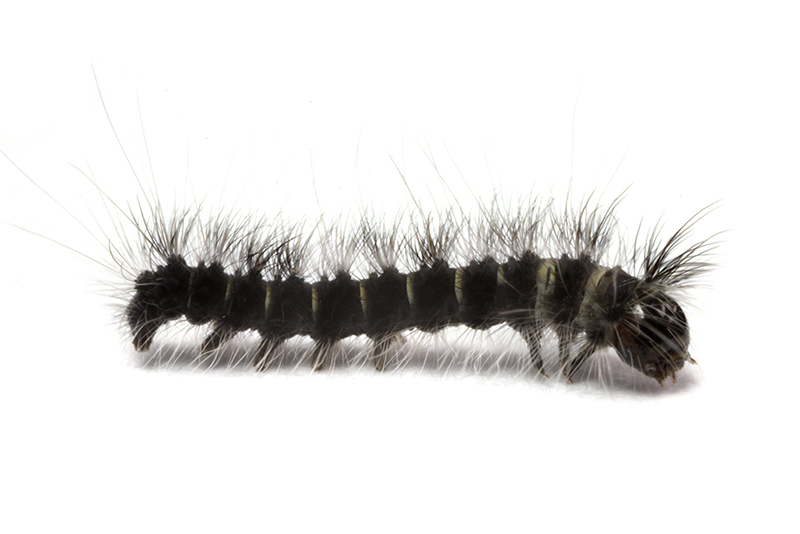
Creating series for Development is challenging in several ways; I’ve written blogs before about big or really small animals, but in my opinion, the biggest challenge has to be animals that go through a big transformation, like some insects (caterpillar to butterfly or larvae to beetle) or amphibians. With these series, timing is of the essence; you want to illustrate the whole process as clearly as possible, without missing any important stages. This also applies to the newest insect species of Development, the Fox moth – Macrothylacia rubi.
Eggs on Marktplaats
It all started a few weeks ago, when I discovered an ad on Marktplaats, the Dutch equivalent of eBay, for some Fox moth eggs. I was immediately interested, because this is a native species of the Netherlands. They are a lot harder to find, because most people in the hobby keep exotic species, and looking for them yourself in nature is difficult, if only because it’s a challenge to determine which exact species the eggs belong to. Straight away, I started to look for information on this moth online and found that the caterpillars feed on bramble. I have several 100% pesticides free bramble bushes in my garden, so I was happy about that. Especially after I couldn’t find any safe food plants for another moth species, the elephant hawk moth, only a few weeks ago. I decided to send the seller a message, and a few days later, the eggs arrived by mail.
Hibernating caterpillars
It turned out that the Fox moth has a challenging characteristic; they hibernate as a caterpillar. The other butterflies I photographed, the Small and Large White and the Suraka silk moth, have a fairly simple lifecycle. It starts (of course) with the eggs, which hatch pretty quickly. The caterpillar stage will last a few weeks, after which they will pupate. A few weeks later, they will emerge as a beautiful butterfly. At this stage, I could set the Large and Small White free in nature, because they are also native to where I live. The Suraka silk moth only has a very short life as a butterfly, so they unfortunately died within a few days. The lifecycle of a Fox moth lasts a lot longer. They are active and keep eating until September, and when the temperature drops in the fall, they will try to find a safe spot to get through winter. In April, when the temperature rises again, they will come out briefly to bask in the sun, before they pupate. After a few weeks, they will come out as moths. My challenge will be to find a suitable and safe place in the garden for them to hibernate, so next year, I will be able to document the pupae and moth stage. There are several reports on the internet on how to care for the caterpillars properly, so I’m pretty confident that I will succeed.
Growth rate?
Last Friday, the Fox moth eggs hatched, so I made a schedule for when to photograph them. The plan is to document the caterpillar stage with eight individual shots. In the period from now to September, that will roughly result in one picture every two weeks. But if the caterpillar grows more quickly, all the big changes will take place within the first few photographs, and the others will be more or less the same. Therefore, I decided to play it safe and also do a series of pictures with a one-week interval instead of two. I thought this was a good plan, until last night, when I saw that the caterpillars had already grown quite a bit since they hatched two days before, and if they continued growing at this rate, they would probably reach their maximum length within only a few weeks.
Lots of pictures
This points out a difficulty in documenting animal growth and development; there are many species for which little is known about the growth rate. Maybe some scientists are studying it, but this information is not widely available on for example, on the internet. So I have no other choice but to do some research on my own and take into account different scenarios. The new plan is to take pictures with a 3, 4, 5, 6, and 7 day interval. This means that I have to take photos of the caterpillar almost daily for the next week to make sure I have the right pictures for the final series. This means a lot more work, but in my opinion, it’s worth the effort in order to find out more about the growth and development of this remarkable species.


Leave a Reply
Want to join the discussion?Feel free to contribute!