
The fast growers of the animal kingdom; canaries
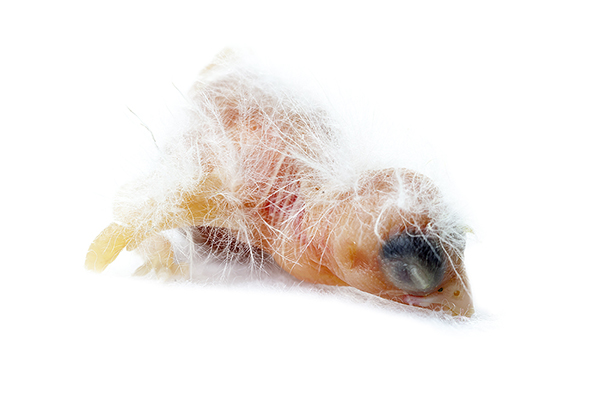
Last week, I was able to finish another series for Development: the growth of a baby canary into a real bird. It’s hard to imagine, but at only three weeks old, these little guys already look just like an adult bird, and it’s hard to tell who the parents are and who the chicks are. It’s really remarkable how fast they grow. To make sure I could capture every phase of their development, I had to adjust my schedule and plan a photo session every three days.
Preparations
Before I started, I visited the breeder to make plans. I could take a look inside their cage, where the female was on her nest and eggs, and we determined where we would build the mobile studio for the photo shoots. It was still a bit edgy as to when we could start with the first session, because this was the female’s first nest, and they don’t always get it right the first time. Fortunately, she was a natural-born mother and a few days later, two baby canaries hatched.
Tiny
Because baby canaries are tiny and very fragile after hatching, it was a bit tense whether everything would go well at first. To disturb them as little as possible, the breeder decided to take them out of the nest with two little spoons that were used as a sort of scoop. Before the actual photo shoot, we made sure that everything was ready and tested, in order for us to bother them as little as possible. After only a few minutes, I had all the shots I needed, and they could return to their mum.
Rapid changes
With every photo session, I was surprised by how much they had changed since I last saw them. There were only three days between the shoots, but it felt like weeks. What started as a strange-looking little thingy got its first feathers within a few days and was a fully functioning wing only a few days later. The canary’s behavior changed very quickly as well. The first few times, he just lay on the cloth, not really moving much, but as he got older, he became more alert every time I saw him. To our surprise, he was very well behaved and didn’t try to walk or fly away. The breeder told me that there was a noticeable difference between this chick and the other ones he had raised before. Our ‘model’ seemed to be much more at ease around humans and came to greet him when he was feeding them or cleaning their cage. Even though we had no reason to expect his behavior would change, we were still prepared for the worst-case scenario and always had a net at hand just in case. The only time he decided to explore the living room was at the last photo session. He is now three weeks old and big enough to leave the nest. A new, very big space, with lots of new things to discover, turned out to be too much temptation, and after a few minutes, he decided to go and explore. At first, we were a bit worried, but fortunately, it was pretty easy to catch him, and in the end, it was quite easy to get the shot I needed.


Leave a Reply
Want to join the discussion?Feel free to contribute!